Our Process
-
Pod Breaking
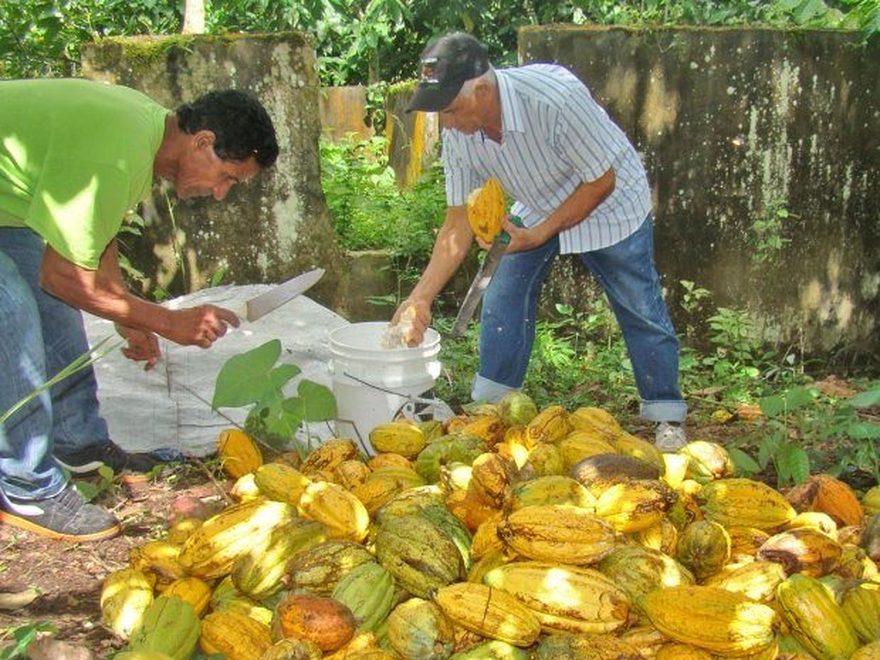
Before breaking the pods we select them, separating diseased pods from healthy ones, and then open them carefully so as not to damage the beans.
After breaking, we remove the beans from the central core into clean, suitable containers, and take them to our fermentation centre in the shortest time possible, between 4 and 6 hours.
-
Transport
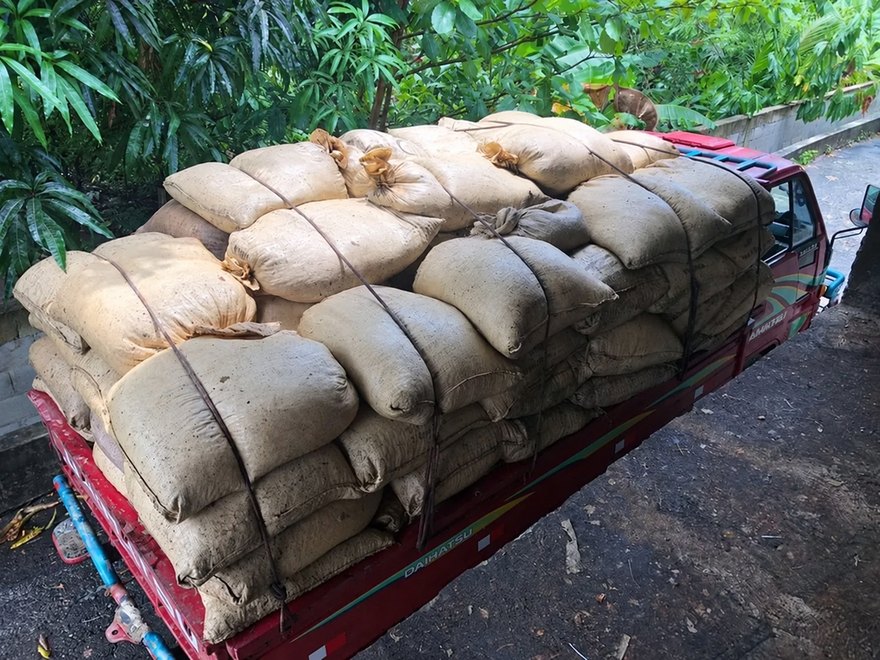
Once the pods have been broken and the beans removed from the core, the cacao must reach the fermentation area, the processing centre, within the first 4 to 6 hours.
If the cacao is carried in sacks, these must be clean and used only for this purpose. Sacks that have held chemical products must never be used.
-
Fermentation
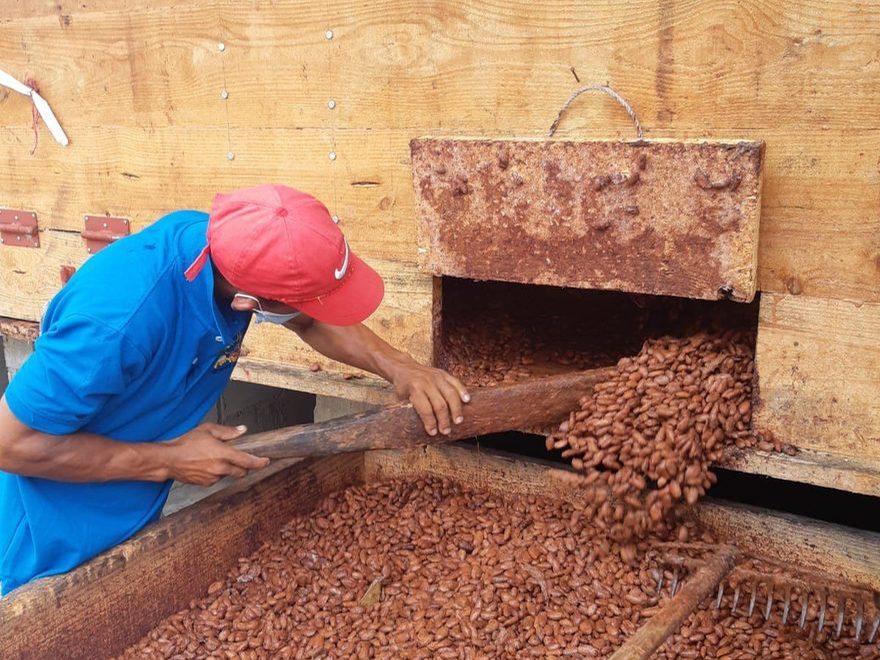
This is the biochemical process the cacao beans undergo in order to develop aroma, flavour and colour.
It happens through the rise in temperature and the action of yeasts and bacteria on the mucilage of the stored pulp.
-
Drying
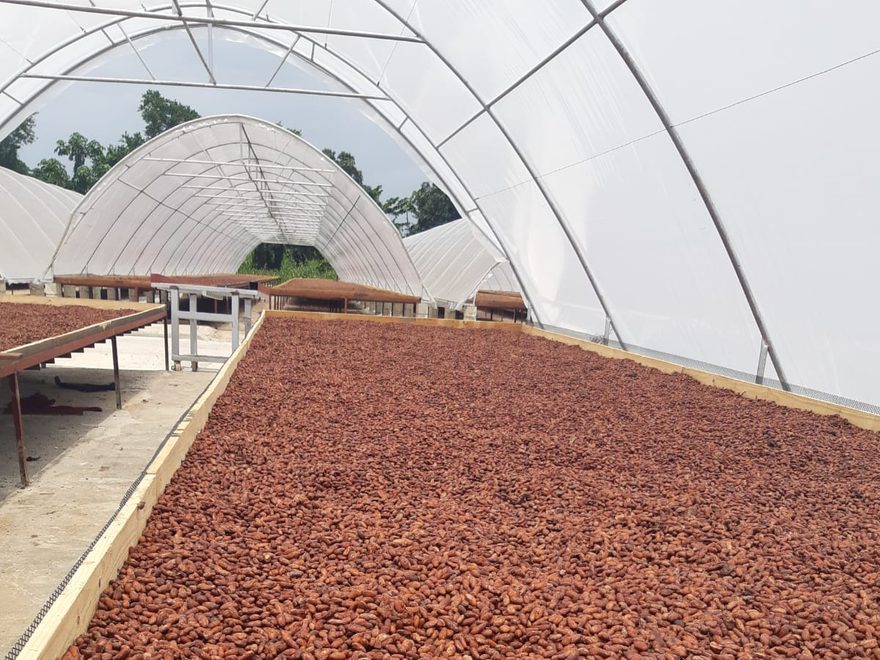
Drying reduces the moisture content of the beans. On leaving the fermentation area they hold around 56% moisture, which must come down by the time drying is finished.
We use tunnel driers, increasingly common in recent years, built with wood and cement platforms and a plastic roof to prevent condensation.
-
Cleaning
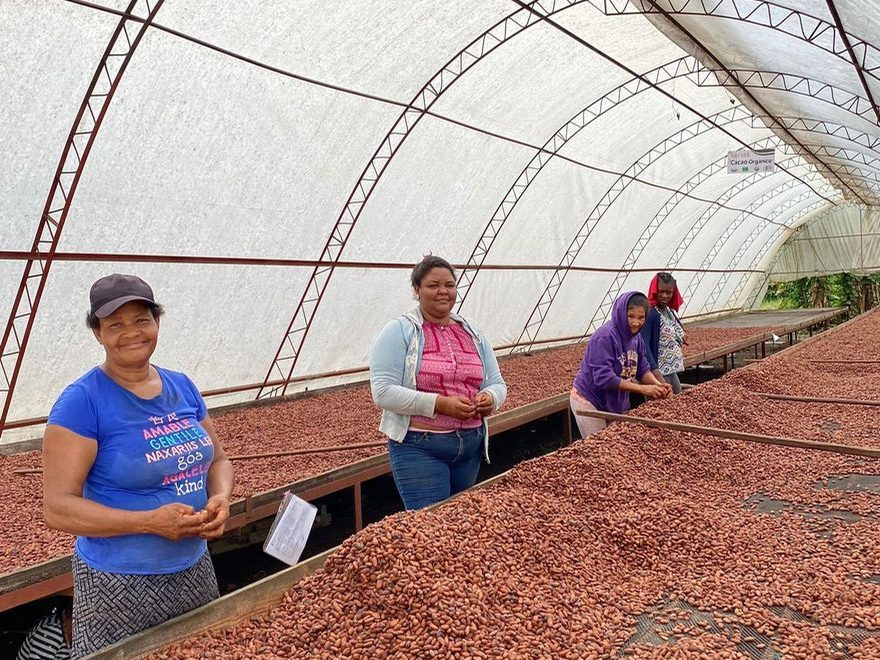
Cleaning and grading the cacao matters a great deal: it separates out impurities and foreign matter such as stones, placenta and cores, along with flat and broken beans, and sorts out the smallest ones.
The result is a more homogeneous product that meets the bean count required by the standards.
-
High Quality Cleaning
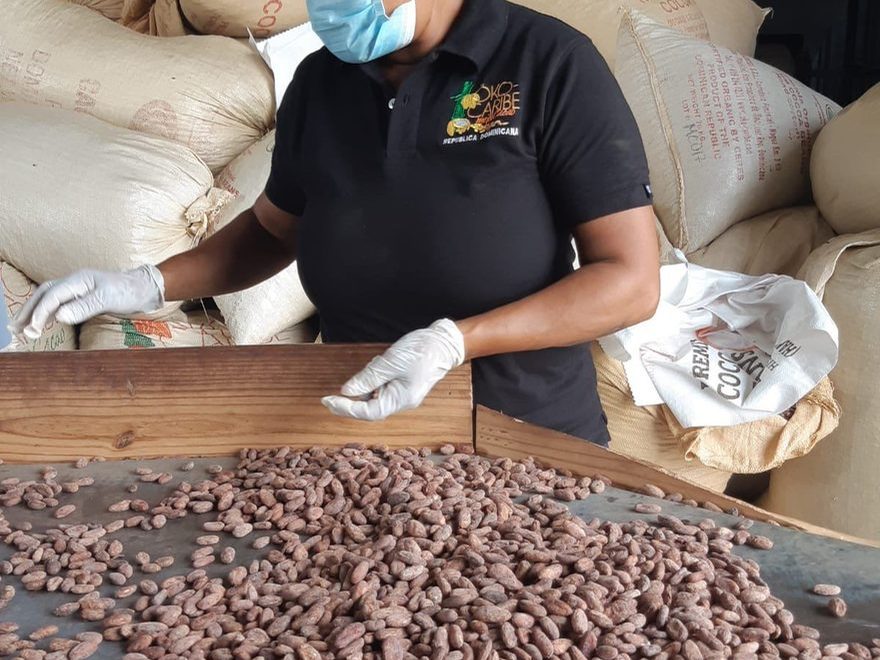
Our highest quality cleaning is done by hand, making sure every impurity is removed: stones, placenta, cores, flat and broken beans.
It delivers a standard above what machine cleaning can achieve.
This cleaning is carried out by women from the same community, providing family income and promoting gender equity.
-
Storage
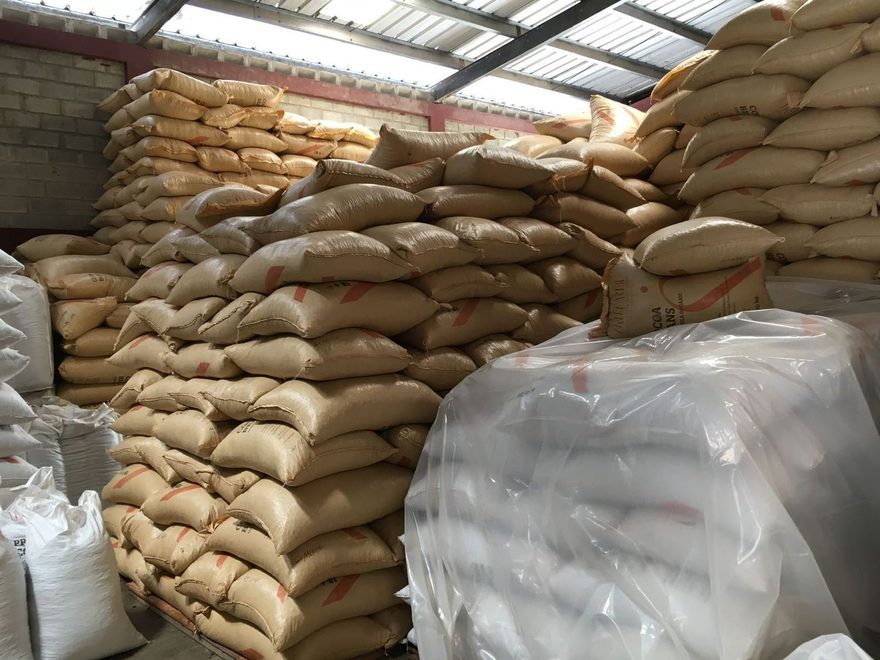
How the cacao is handled in the warehouse is of the utmost importance: conditions must be right to preserve quality and prevent any deterioration.
Sacks must be properly sewn and stored on wooden platforms or pallets. No part of a sack should touch the floor or the walls of the warehouse.
Cacao is stored by quality grade, and every sack is identified with its lot number.
-
Exportation
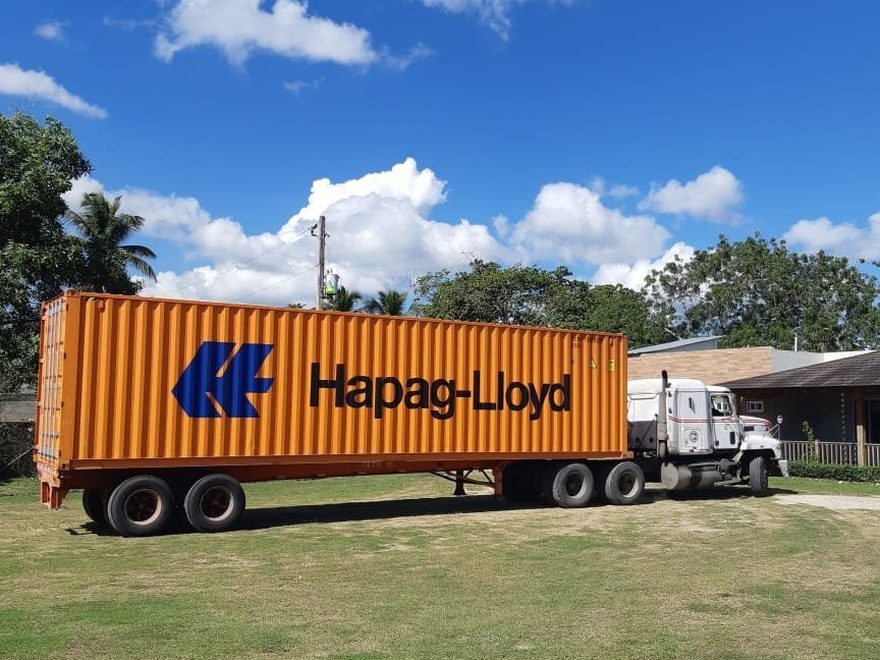
The Dominican Republic stands out as the largest exporter of organic cacao and the third largest producer on the continent, supplying 32,000 metric tonnes a year to markets as demanding as Japan, the United States and Europe.
The country exports an average of 40,000 tonnes of all types of cacao each year. Criollo has become the highest priced in the world, above leaders such as Ecuador, previously the best paid on international markets.


